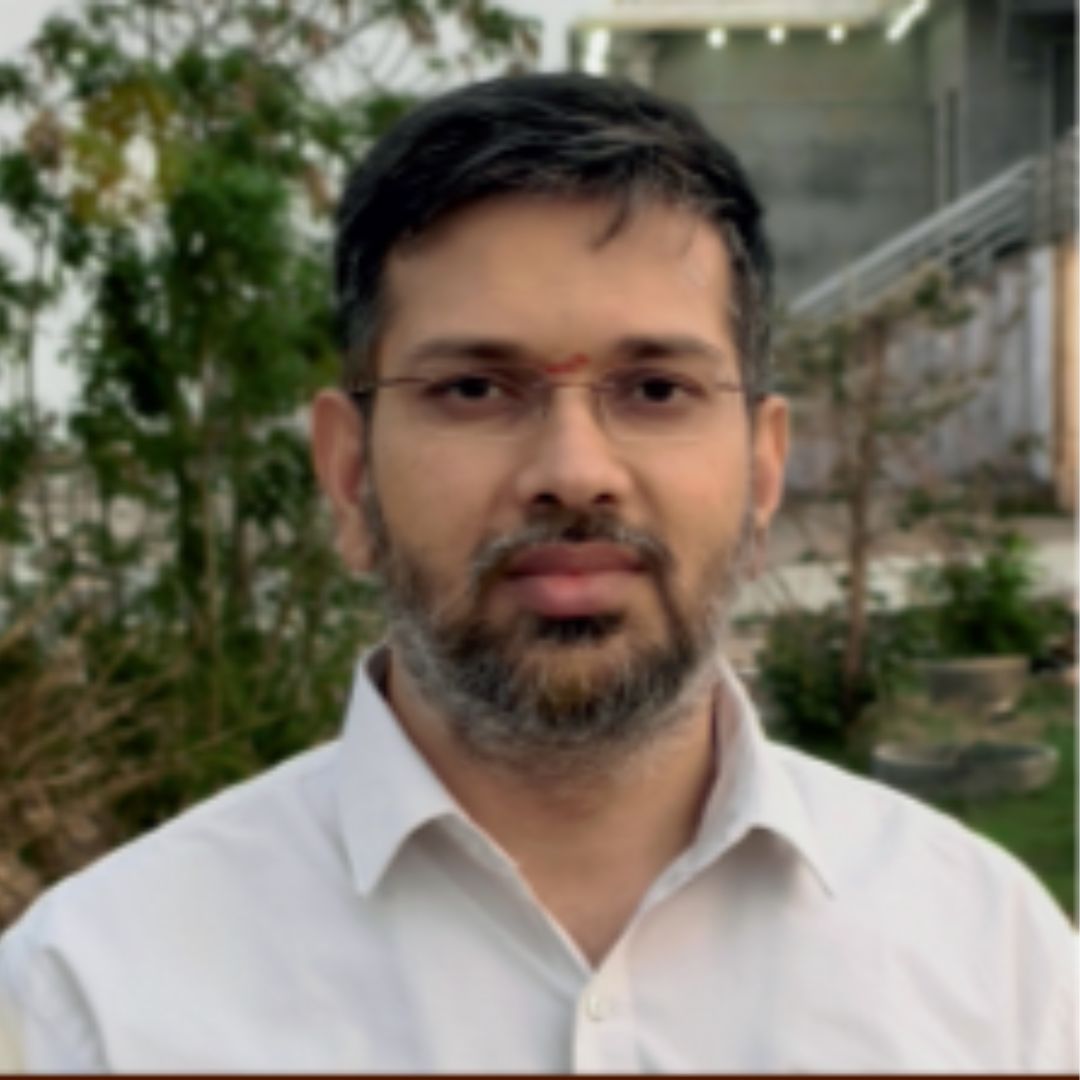
Mr. GNVS Sudhakar
Co-founder, SPGAMT Products Pvt. Ltd.
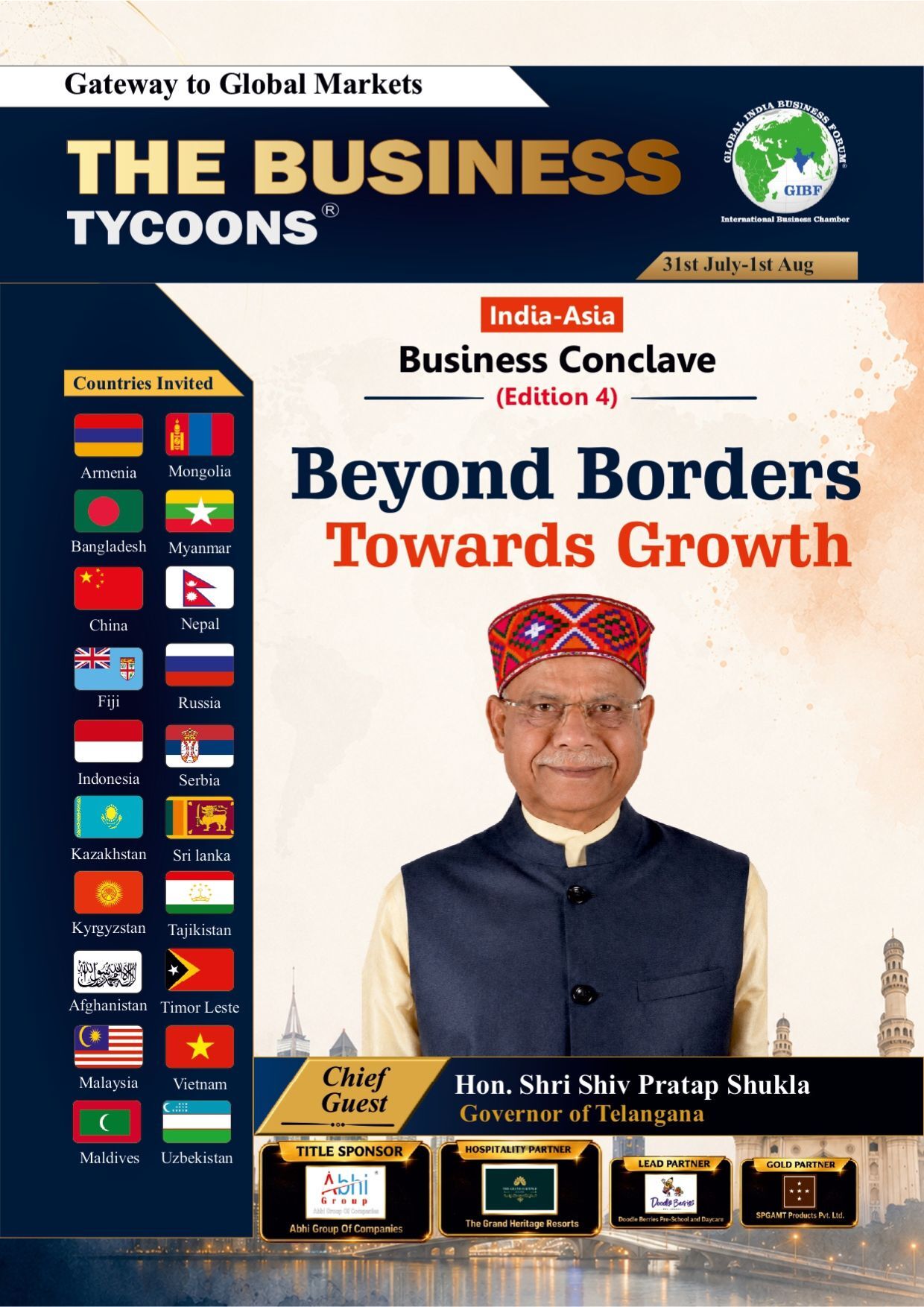
Published by The Business Tycoons -
August 2026
SPGAMT - Where Ancient Wisdom Meets the Future of Computing
- In an age defined by artificial intelligence, high-performance computing and quantum technologies, SPGAMT Products Pvt. Ltd. is pursuing an unconventional question: Could one of the world's oldest linguistic systems hold clues to solving computing's persistent challenges?
- For the company's co-founder, the question represents the convergence of two lifelong interests—computing and Sanskrit grammar. What began as an academic curiosity has evolved into a technology venture seeking to rethink computation.
The Journey
- After completing his MCA at NITK Surathkal, the Co-founder Mr. GNVS Sudhakar, presented a seminar exploring Sanskrit and modern computers. His career took him deep into technology. For more than two decades, he worked at Novell, now part of OpenText, across Windows kernel systems, Linux, distributed computing, security, storage and networking. His work also resulted in several patents.
- Years later, while pursuing a course in deep learning, he returned to Sanskrit. Revisiting its grammar and underlying structures, he began exploring whether principles from this ancient intellectual tradition could offer a different approach to modern computation.
- In 2025, he co-founded SPGAMT with Sanskrit scholar M. Narendra, whose expertise has helped shape the company's approach. Today, SPGAMT is an incorporated, fab-less semiconductor company developing an FPGA-based co-processor as its first proof of concept.
The Big Question
- The company's philosophy emerged from observations made during years of deep, kernel-level engineering. According to its founders, fundamental computational limitations often reappear at different levels of abstraction.
- This led them to examine challenges in parallel processing, artificial intelligence and quantum computing. They believe current approaches face limitations in achieving true parallelism, developing goal-oriented reasoning for advanced AI and enabling reliable quantum computation.
- Rather than simply refining existing methods, the founders returned to Paninian grammar and North Mimansa. Through further study and discussions with M. Narendra, they became convinced that Sanskrit's grammatical framework could offer new possibilities for computational architecture.
The Innovation
- SPGAMT's central proposition is Queue-Free Parallelism—an approach intended to eliminate algorithmic queuing that, in its view, limits conventional processors. The concept is guided by a deterministic mechanism called the Viswamitra Rule, designed to prevent unresolvable computational loops.
- The company is also exploring whether the structural principles of Mimansa can contribute to safer and more goal-oriented artificial intelligence. Its long-term vision is to develop AI architectures with deeper logical and ethical grounding than today's large language models.
- The founders believe these principles could eventually have applications in reliable quantum computing and, in the longer term, energy generation. These possibilities form part of SPGAMT's broader mission to investigate whether ancient intellectual frameworks can contribute to modern technological challenges.
Milestones and Road Ahead
- A significant milestone came in 2025 with the filing of SPGAMT's provisional Indian patent. Incorporating the company soon afterwards gave the founders' research a formal commercial and engineering foundation.
- Participation in Supercomputing India 2025 provided an opportunity to connect with experts across the technology ecosystem. Encouragement from the Department of Science and Technology further strengthened the company's resolve to advance its research and product development.
- SPGAMT is following a four-year productisation roadmap. The initial phase focuses on completing its FPGA-based proof-of-concept co-processor for parallel workloads. The next phase will involve developing the software toolchain, refining the architecture and advancing ASIC planning and verification. The final stage is expected to move towards first silicon for field trials and eventual commercial deployment.
- Beyond its initial hardware platform, the company plans to explore machine learning architectures rooted in Mimansa, with the objective of enabling safer and more goal-oriented reasoning. Its longer-term vision includes reliable quantum computing.
Going Global
- SPGAMT expects its future business model to include technology sales and licensing, along with industrial and educational partnerships in countries with an established interest in Sanskrit.
- As a hardware startup, the company requires advanced FPGA boards, EDA tools and nanometer-scale chip fabrication and testing services. While some capabilities are available in India, specialised requirements will need to be sourced internationally, creating opportunities for global technology partnerships.
A Guiding Principle
- Despite the scale of its ambitions, SPGAMT's journey remains grounded in humility. Its founder believes every innovation builds upon the knowledge and perseverance of those who came before.
- His advice to aspiring entrepreneurs is simple: remain humble. Disruptive technology does not need loud claims to prove its worth. It requires patience, rigour and respect for the people and ideas upon which it is built.
- At the intersection of Sanskrit grammar, computing and emerging technologies, SPGAMT is pursuing an unconventional path—looking to the wisdom of the past not out of nostalgia, but in search of principles that could help shape the future of computation.