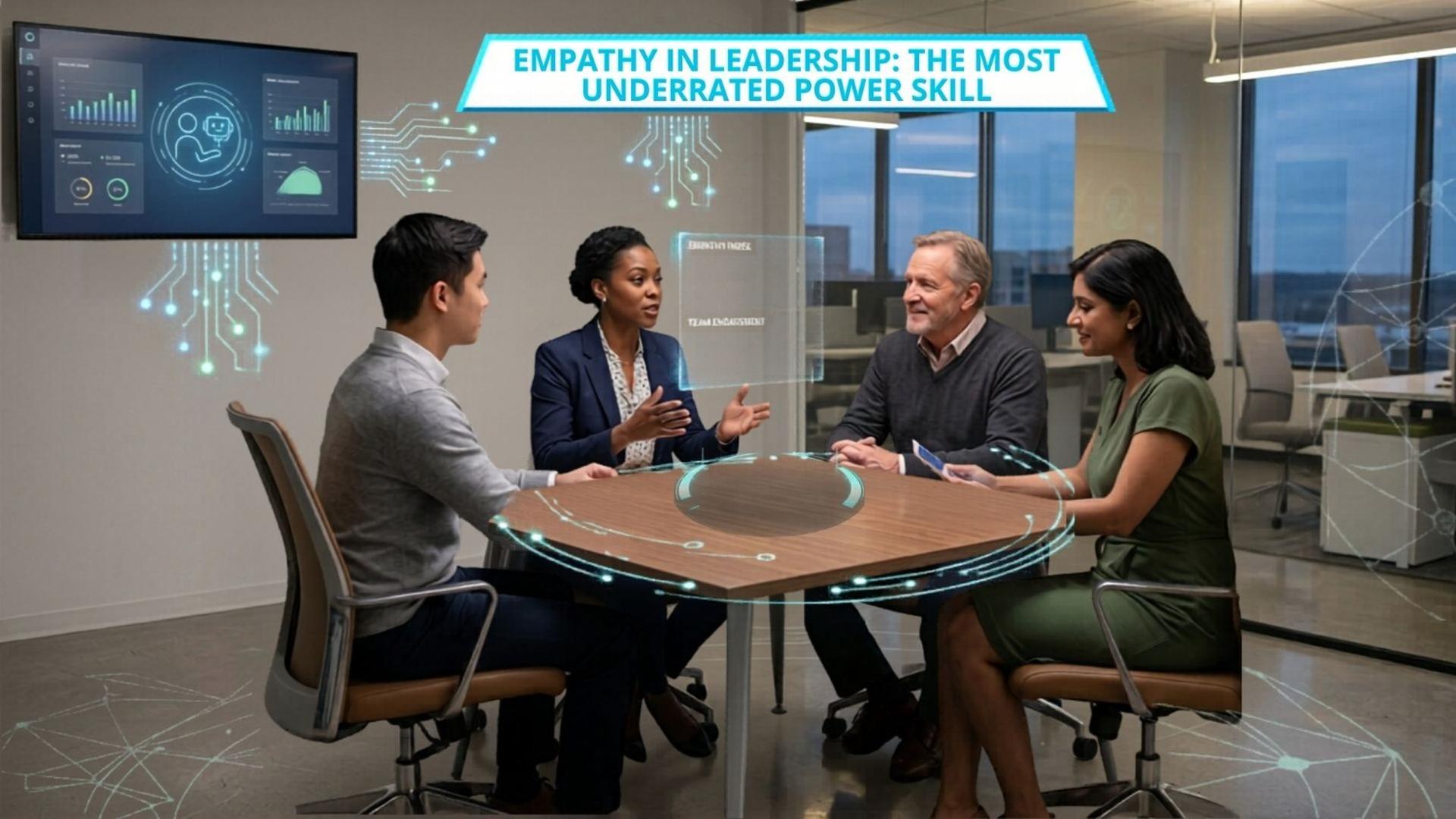
In a world driven by performance metrics, quarterly targets, and constant disruption, one leadership quality often gets overlooked—empathy.
For years, leadership was defined by authority, decisiveness, and control. Leaders were expected to have all the answers, maintain distance, and focus solely on outcomes. But the workplace has evolved—and so have people’s expectations from those who lead them.
Today, empathy is no longer a “soft skill.” It is a strategic advantage.
For years, leadership was defined by authority, decisiveness, and control. Leaders were expected to have all the answers, maintain distance, and focus solely on outcomes. But the workplace has evolved—and so have people’s expectations from those who lead them.
Today, empathy is no longer a “soft skill.” It is a strategic advantage.
What Does Empathy in Leadership Really Mean?
Empathy in leadership is not about being lenient or avoiding tough decisions. It is about understanding perspectives, acknowledging emotions, and creating an environment where people feel heard and valued.
An empathetic leader listens—not just to respond, but to understand. They recognize that behind every role is a human being with aspirations, challenges, and emotions that influence performance.
And when people feel understood, they engage more deeply, contribute more meaningfully, and perform more consistently.
An empathetic leader listens—not just to respond, but to understand. They recognize that behind every role is a human being with aspirations, challenges, and emotions that influence performance.
And when people feel understood, they engage more deeply, contribute more meaningfully, and perform more consistently.
Why Empathy Matters More Than Ever
The modern workplace is complex. Hybrid work models, evolving career expectations, and increasing mental health awareness have changed how people connect with their work.
In such an environment, leaders who lack empathy risk creating disengagement, burnout, and high attrition.
On the other hand, organizations led with empathy tend to see:
In such an environment, leaders who lack empathy risk creating disengagement, burnout, and high attrition.
On the other hand, organizations led with empathy tend to see:
- Higher employee engagement
- Stronger collaboration
- Greater innovation
- Improved retention
Because when trust exists, people are more willing to share ideas, take risks, and go beyond defined roles.
Empathy Drives Performance, Not Weakness
There is a common misconception that empathy compromises performance. In reality, it strengthens it. Empathy does not eliminate accountability—it enhances it.
When leaders understand their teams, they can align strengths with responsibilities, provide meaningful feedback, and create clarity around expectations. This leads to better outcomes, not diluted standards.
The most effective leaders balance empathy with decisiveness. They care deeply—but they also act firmly when required.
When leaders understand their teams, they can align strengths with responsibilities, provide meaningful feedback, and create clarity around expectations. This leads to better outcomes, not diluted standards.
The most effective leaders balance empathy with decisiveness. They care deeply—but they also act firmly when required.
Building Empathy as a Leader
Empathy is not an inherent trait reserved for a few—it is a skill that can be developed.
It begins with simple but intentional actions:
It begins with simple but intentional actions:
- Listening actively without interrupting
- Asking thoughtful questions instead of making assumptions
- Being present in conversations
- Recognizing efforts, not just results
- Creating space for open dialogue
Small shifts in behaviour can significantly transform how teams perceive leadership.
The Leadership Shift
The future of leadership is not about commanding from the top—it is about connecting at every level. As organizations become more agile and people-centric, the ability to understand and relate will define truly effective leaders. Because at its core, leadership is not just about driving results. It is about inspiring people to achieve them.
Empathy is not a weakness in leadership. It is strength—expressed with awareness. And in a world where talent has choices and voices matter more than ever, leaders who lead with empathy will not only build stronger teams - they will build lasting impact.
Empathy is not a weakness in leadership. It is strength—expressed with awareness. And in a world where talent has choices and voices matter more than ever, leaders who lead with empathy will not only build stronger teams - they will build lasting impact.