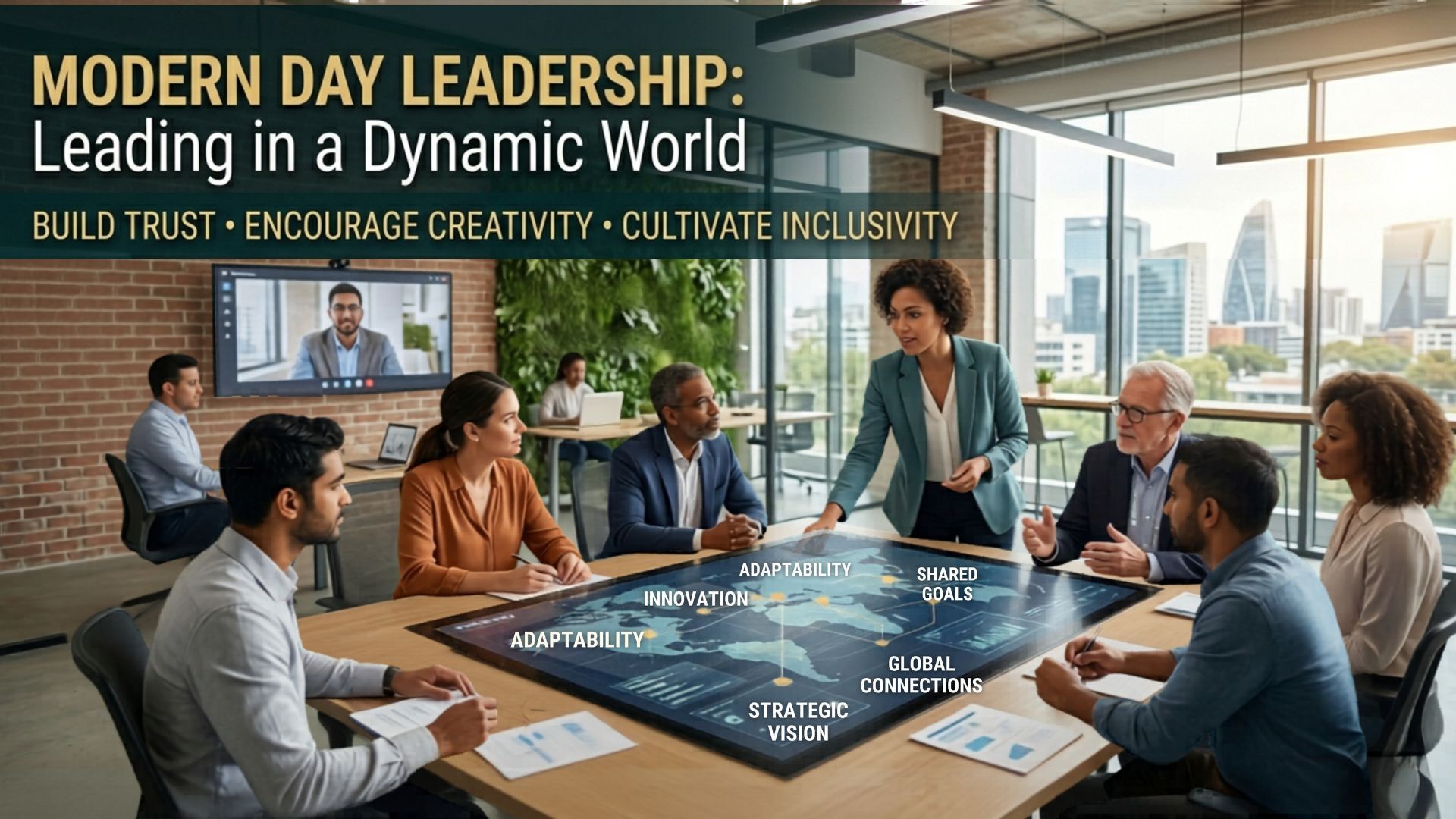
In today’s fast-paced and constantly evolving world, leadership is no longer defined by authority or position alone. Modern-day leadership is about adaptability, empathy, innovation, and the ability to inspire others in an environment filled with uncertainty and change.
The Shift from Traditional to Modern Leadership
Traditional leadership focused on hierarchy, control, and decision-making from the top. Leaders were seen as authoritative figures who directed their teams. However, modern leadership has shifted toward collaboration, inclusivity, and shared responsibility.
Today’s leaders are facilitators rather than commanders. They empower their teams, encourage creativity, and build a culture of trust.
Key Traits of Modern Leaders
- 1. Emotional Intelligence: Modern leaders understand the importance of emotions in the workplace. They are self-aware, empathetic, and skilled in managing relationships. Emotional intelligence helps leaders connect with their teams and foster a positive work environment.
- 2. Adaptability: With rapid technological advancements and market changes, adaptability is essential. Leaders must be flexible and open to change, ready to pivot strategies when necessary.
- 3. Vision and Innovation: Modern leaders are forward-thinking. They anticipate future trends, embrace innovation, and encourage their teams to think creatively. A strong vision helps guide organizations toward long-term success.
- 4. Effective Communication: Clear and transparent communication is a cornerstone of modern leadership. Leaders must actively listen, provide constructive feedback, and ensure that everyone is aligned with organizational goals.
- 5. Inclusivity and Diversity: Today’s leaders value diverse perspectives and promote inclusivity. They create environments where individuals feel respected and empowered to contribute their unique ideas.
The Role of Technology in Leadership
Technology plays a significant role in shaping modern leadership. Leaders must be digitally aware and capable of managing remote teams, using digital tools, and leveraging data for decision-making. Virtual leadership has become increasingly important in a globalized world.
Challenges Faced by Modern Leaders
Modern leaders face several challenges, including:
- Managing remote and hybrid teams
- Keeping employees engaged and motivated
- Navigating constant change and uncertainty
- Balancing productivity with employee well-being
Overcoming these challenges requires resilience, continuous learning, and a people-centric approach.
Real-World Relevance
In organizations across industries—from startups to multinational corporations—modern leadership practices are driving success. Leaders who embrace innovation, prioritize people, and adapt to change are better positioned to navigate challenges and seize opportunities.
In contexts such as global business events, corporate collaborations, and international networking platforms, modern leadership plays a key role in building partnerships, managing diverse stakeholders, and driving strategic growth.
Ratan Tata – Ethical and Value-Based Leadership
The late Ratan Tata, former chairman of Tata Group, is widely respected for his integrity and ethical leadership.
Leadership Approach:
- Strong focus on ethics and corporate responsibility
- Long-term vision over short-term gains
- Commitment to social impact and nation-building
Impact:
Under his leadership, Tata Group expanded globally while maintaining its reputation for trust and ethical business practices.
To summarize, modern-day leadership is about more than just leading—it is about inspiring, empowering, and evolving. Successful leaders today are those who can adapt to change, embrace diversity, and build strong relationships with their teams. As the world continues to evolve, so too must leadership styles, ensuring organizations remain innovative, competitive, and sustainable.