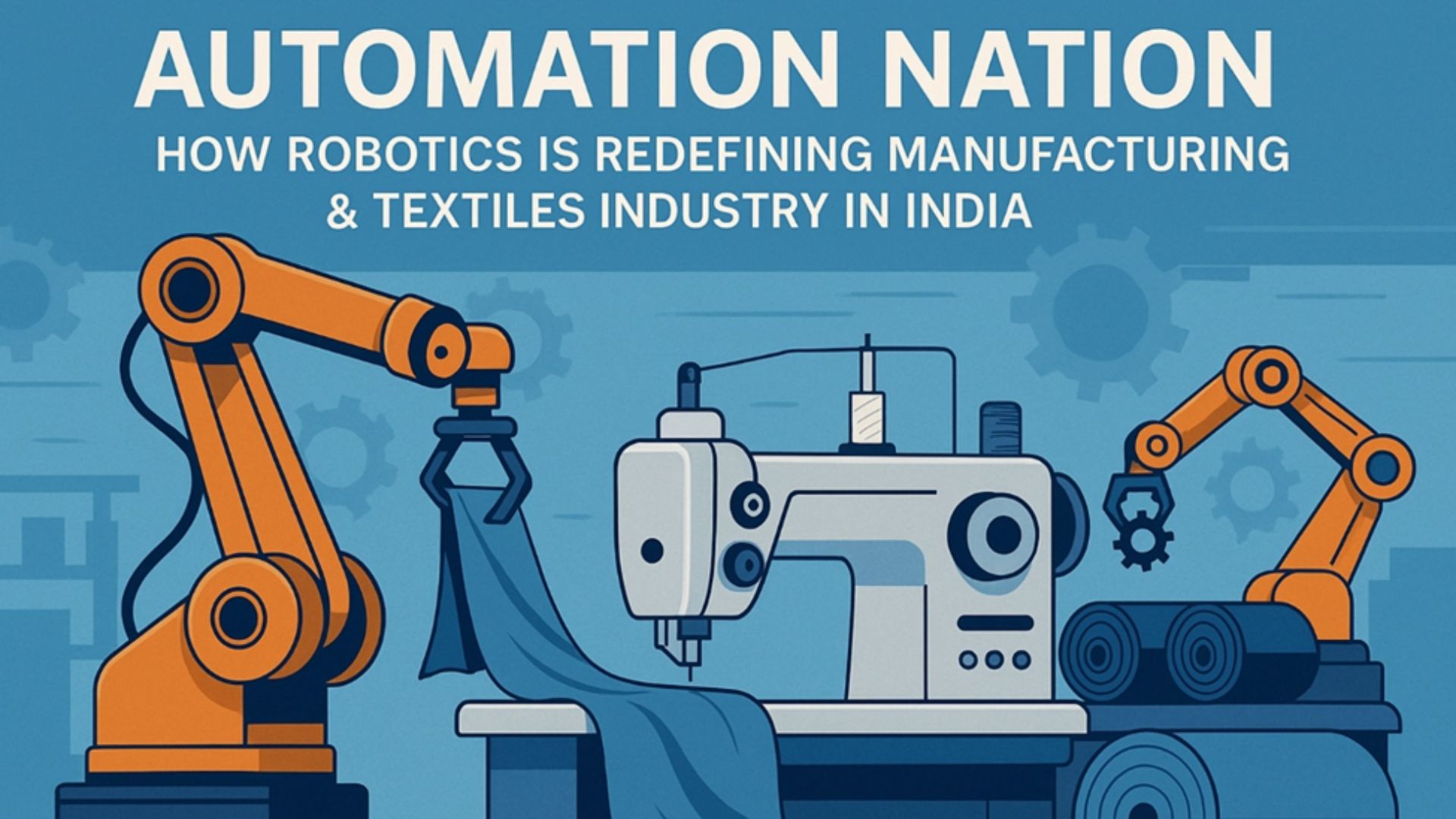
India’s industrial landscape is undergoing a major transformation with robotics and automation emerging as game-changers. Traditionally labor-intensive, sectors like manufacturing and textiles are now integrating smart technologies to boost productivity, precision, and global competitiveness.
A New Era in Manufacturing
- The Indian manufacturing sector is evolving rapidly under the influence of Industry 4.0 and initiatives like Make in India and the PLI scheme. Robotics and automation are now widely used across assembly lines, packaging, and quality control — reducing human error and accelerating output.
- In 2023, India installed 8,510 industrial robots, marking a 59% increase from the previous year. According to the International Federation of Robotics, this makes India the seventh-largest robot market globally. The industrial robotics market in India is projected to grow at a CAGR of 13.8%, reaching USD 3.4 billion by 2030.
- A notable innovation in early 2025 was the launch of Delta’s D-Bot series of collaborative robots (robots), designed for electronics, metal fabrication, and packaging industries. These 6-axis robots are helping Indian SMEs embrace automation without replacing workers entirely.
Textiles Industry: Automating for Global Relevance
- India’s textile industry, one of the country’s largest employers, is also adopting automation to stay globally competitive. Robotic fabric inspection, digital printing, automated dyeing, and robotic sewing are becoming common in smart textile factories.
- This transformation is vital as countries like Bangladesh and Vietnam compete on low labor costs. By automating repetitive processes, Indian textile hubs like Tirupur and Surat are reducing lead times and improving output consistency.
- Between 2024 and 2028, the textile automation market in India is expected to grow by USD 775 million, driven by the need to modernize outdated machinery and improve energy efficiency. The overall textiles market is projected to reach USD 350 billion by 2030 with a 10% CAGR.
Key Benefits of Robotics
- Higher Productivity: Robots can operate continuously, increasing overall output.
- Improved Quality: Automation ensures precision and consistency in every process.
- Long-Term Savings: Despite high initial costs, businesses save on labor and material waste.
- Safer Workplaces: Robots handle dangerous tasks, reducing workplace injuries.
Barriers to Adoption
Despite the benefits, many small and medium enterprises (SMEs) face hurdles like high setup costs, lack of skilled operators, and cultural resistance to replacing manual labor with machines. Concerns over job losses also slow adoption, especially in traditional sectors like textiles.
Innovations and India’s Way Forward
To overcome these challenges, the government is actively promoting technical training through programs like Skill India. Educational institutions are launching robotics and automation courses to build a future-ready workforce.
Startups are also contributing to the revolution. Noida-based Addverb Technologies is building cost-effective robots tailored for Indian industries and developing India’s first humanoid robot, set to launch in 2025. Indian robotics firms are collaborating with global tech giants like NVIDIA to use platforms such as Omniverse and Isaac Sim for warehouse and logistics automation.
Conclusion
India’s journey as an “Automation Nation” is no longer just aspirational — it’s happening now. With rising investments, growing innovation, and supportive policy frameworks, robotics is reshaping how India manufactures and exports.
By embracing automation in manufacturing and textiles, India is not just increasing efficiency but also securing a resilient, competitive position in the global economy.